

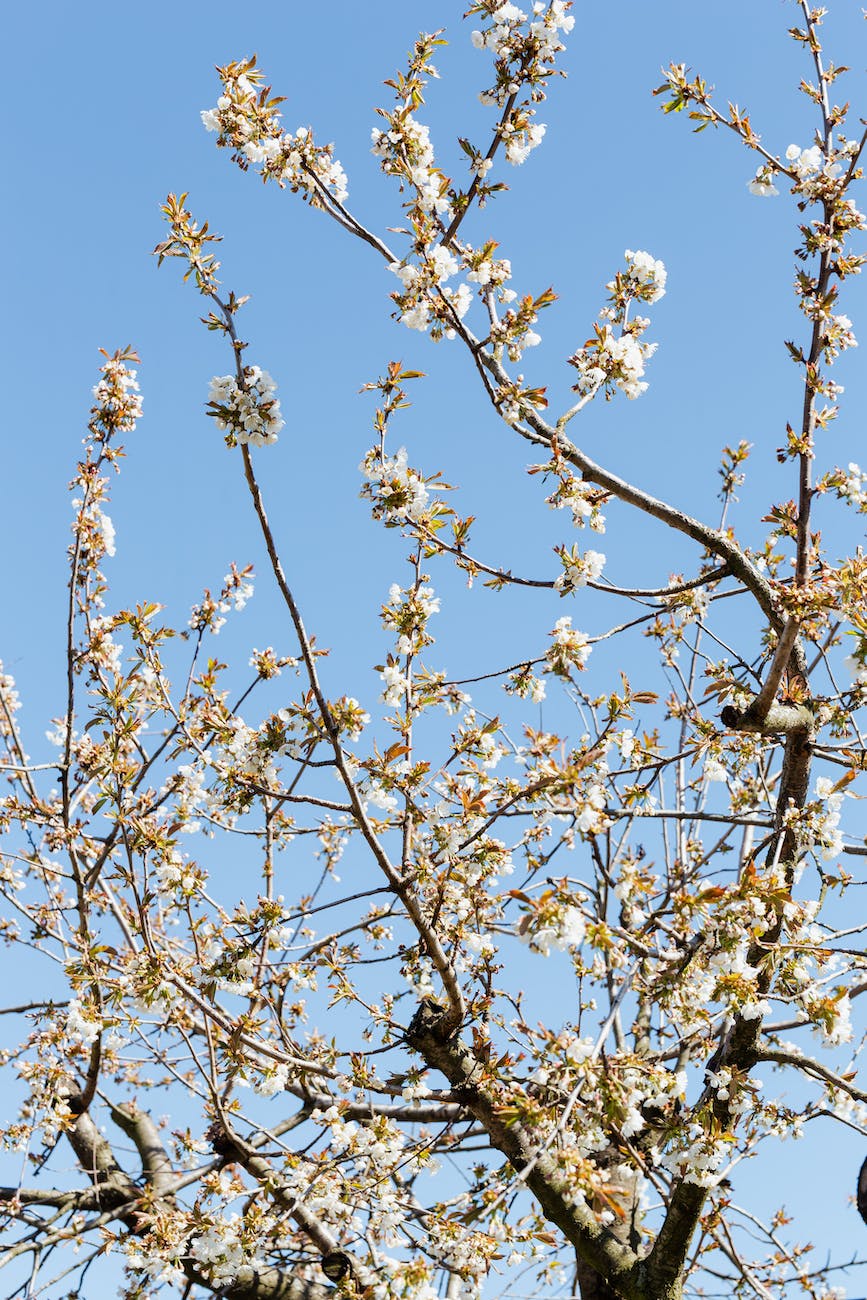
One of my favorite authors is Anton Chekhov, 19th-century Russian playwright and master of the modern short story[1]. In his play The Cherry Orchard, Chekhov highlights the theme of time.
Photo from the Web: anonymous artist
When Tsar Alexander the Second abolished serfdom in Russia in 1861[2], the agricultural lands were abandoned and the landed gentry suddenly found themselves unable to keep their properties which were no longer profitable. Anton Chekhov’s play The Cherry Orchard is set in this nineteenth-century background when Russia was transitioning from the old ways to the new industrialized age. However, the Russian aristocrats, stuck in the only life they knew, which was dependent on other people’s labor, were hesitant to adjust to the changing times. The emphasis on time in the story signifies a transition from the old Russia to a new nation struggling to adapt to modernization.
Puchner, et al. contend that “the single event in the drama – the sale of a beautiful but unprofitable aristocratic estate – suggests the passing of the old regime and the coming of a new order”[3]. The old country was based on serfdom and agriculture; the new one was bent on industrialization. The coming of age is characterized by people coming to the country for summer homes and, as a former servant who has risen to middle-class status, businessman Lophakin tries to convince the property owners Liubov Anreyovna and her brother Gayev to cut down the orchard, subdivide the land, and build leisure homes on the land for profit, he speaks for the new generation of Russians who clearly see a vision of the future: “You used to be out here in the country where there were only landlords and poor farmers, but now all of a sudden summer people are moving in; they want vacation homes. Every town you can name is surrounded by them – it’s the coming thing”[4] . While he tells them that this is an opportunity to gain good profit in the future, the siblings tenaciously hold on to the past. “Subdivide, leisure homes … excuse me, but it’s all so hopelessly vulgar,” Anreyovna protests, to which her brother Gayev agrees[5].
The old Russian aristocracy owned slaves who worked for them while they did nothing. Now that the slaves are gone, they have no more earnings from the land. While living in Paris for five years, the family failed to pay their mortgage on their ancestral property and the bank has foreclosed on it and has put it on auction. As the auction is about to start, the family is having a party, and Gayev, in denial, suggests that they “go back to the house and play a little game”[6] And, asked by Lopakhin to give him an answer soonest because “time is running out,” he answers, “To what?” He fails to understand the urgency of the moment to save the estate[7]. In their traditional thinking, the brother and sister represent the old Russia.
The scholar Trofimov challenges Anreyovna’s seventeen-year-old daughter Anya to reflect on her people’s mindsets: “Just think, Anya, your grandfather and his father and his father’s fathers, they owned the people who slaved away for them all over this estate, and now the voices and faces of human beings hide behind every cherry in the orchard, every leaf, every trunk. … And owning human beings has left its mark on all of you. Look at your mother and your uncle! They live off the labor of others, they always have and they’ve never even noticed! They owe their entire lives to those other people, people they wouldn’t even let walk through the front gate of their beloved cherry orchard! This country has fallen behind; it will take us at least two hundred years to catch up”[8]. Indeed, Russia was a century late in modernization than most of Western Europe[9].
In contrast to her mother and uncle’s sadness over the sale of their old estate, Anya, representing the new generation of Russians, is excited to face the future. Her mother asks her if she is pleased, and as she looks radiant, she answers, “Oh yes, Mama, really! We’re starting a new life! We’ll spend long autumn evenings together and read lots of books and learn all about the wonderful new world of the future …”[10].
Like a reversal of fortune, on the day the family is leaving the old house, their neighbor, Pishnick, another landlord, comes to pay money to Lophakin. Now, the aristocrat owes money to someone who used to belong to the lower class. Judging from the luggage and furniture being moved out of the house, he realizes that this old beautiful estate no longer belongs to the family. After blessing them and wishing them happiness, he speaks this famous line: “Well, all things must come to an end”[11].
Ironically, however, the play ends sadly. Firs, the family’s eighty-seven-year-old butler who has been loyal to them since childhood, is now suffering from dementia and is very sick. In the chaos of the property’s sale and the coming and going of people in the house, the family forgets to check on him. Thinking that he was taken to the nursing home that morning, they did not bother to check on him before leaving. When the family has gone, he comes out of his room and goes to the front door but, finding it locked, he murmurs, “They forgot about me”[12]. And he sits on the sofa, thinking that they might come back because “Leonid Andreyich probably forgot his coat … and that he “should have looked,” still thinking about his master … “He’s still all wet, that one …”[13]. His mind goes back to the distant past when Gayev was still a boy. And he sits there waiting and dies[14].
Anton Chekhov is saying that the new order is incapable of protecting the very people that it wants to uplift[15]. Speaking through Trofimov, he moralizes, “The thing is we don’t even have a real sense of our history; all we do is sit around and talk, talk, talk, then we feel depressed, so we go out and get drunk. If there’s one thing that’s clear to me, it’s this: if we want to have any real life in the present, we have to do something to make up for the present, we have to get over it, and the only way to do that is to make sacrifices, get down to work, and work harder than we’ve ever worked before”[16]. What will happen to all the former servants and farmers who are now dislocated? Where would they go? They do not have the skills to survive in the new highly industrialized world. A nation that used to be divided by class struggle is now facing another crisis and only time will tell whether it will thrive in the enterprise of the modern world.
What’s the relevance of The Cherry Orchard to us in the modern world? To a Filipino American like me, the passage of time in the play parallels the transition from the feudal system of Spanish times Philippines to the capitalist system of the present Philippine Republic, or from that of the antebellum (slavery) period to the abolition of slavery in the United States in the 19th century[17]. It also talks to us about our transition from one stage of life to another, like in the case of the family’s old butler Firs, as he fades into the sunset of dementia – as many of our elders experience. However, unlike the family he had served loyally since he was a boy, I hope we never forget our elders – in our homes, in nursing homes, our aging parents – wherever fate may have led us – and wherever the future may take us.

Chekhov, Anton. The Cherry Orchard. Schmidt, Paul, Translator. Puchner, Michael, et
al., Editors. The Norton Anthology of World Literature. 3rd ed., vol. 2.
New York, W. W. Norton & Company, 2013.
Hingley, Ronald Francis. “Anton Chekhov.” Britannica. December 3, 2023.
Tanner, Alexandra. “The Cherry Orchard Themes.” LitCharts. LitCharts LLC, 14 October
2018. https://www.litcharts.com.
[1] Britannica
[2] Chekhov, Puchner p. 939.
[3] Puchner, p. 939.
[4] Chekhov, p. 939
[5] Ibid., p. 937
[6] Ibid., p. 936
[7] Ibid., p. 937
[8] Ibid.
[9] Puchner, p. 919
[10] Chekhov, p. 956-7
[11] Ibid., p. 957
[12] Ibid., p. 960
[13] Ibid.
[14] Ibid.
[15] Tanner
[16] Chekhov, p. 943
[17] National Archives Foundation. “The long Road to Abolition.” June 6, 2023. https://www.nationalarchives.gov.
 The Journey Through Literature
Leave a comment